Working in Dubai: A Comprehensive Guide to Jobs, Visas, and Life in 2026
Dubai continues to solidify its position as a premier global hub for professionals, offering a dynamic job market, tax-free income, and unparalleled career opportunities.
Dubai's Job Market in 2026: Trends and Opportunities
The employment outlook for Dubai and the wider UAE is exceptionally strong. A recent survey by ManpowerGroup indicates a Net Employment Outlook of 46% for Q1 2026, placing the UAE among the top three strongest labor markets globally. This optimism is echoed by a Cooper Fitch study, which found that 48% of companies in the UAE and Saudi Arabia plan to hire more people in the coming year. This growth is driven by expectations of robust macroeconomic expansion and large-scale infrastructure projects in Dubai.
However, the market is also selective. While hiring sentiment is positive, 29% of employers anticipate workforce reductions as part of cost discipline. Furthermore, employers report difficulty filling roles, with 75% citing shortages in specialized skills like AI development, IT, data, and engineering.
Key hiring sectors for 2026 include:
- Aviation, Defense & Aerospace: Showing some of the strongest signals for double-digit headcount growth.
- Automotive & Finance: Leading sectors with the highest hiring outlooks of 83% and 73%, respectively.
- Technology & Green Energy: Boosted by government strategic investment in AI, digital transformation, and sustainability.
Navigating Visa and Legal Requirements
Securing the right to work in Dubai is contingent on a work visa sponsored by your employer. The process is detailed, and regulations are strict.
Key Visa Types:
- Standard Work Visa: The most common, typically valid for two years and tied to your employer.
- Golden Visa: A long-term residency visa for high-caliber professionals, investors, and entrepreneurs. The salary threshold for eligibility was recently raised to a monthly minimum of AED 50,000.
- Green Visa: A five-year residency option for skilled professionals, freelancers, and self-employed individuals without a sponsor.
The Emiratisation Factor: A critical policy to understand is Emiratisation, a national initiative to increase citizen employment in the private sector. Companies must meet semi-annual quotas, aiming for 10% of their workforce to be UAE nationals by the end of 2026. This policy can influence hiring decisions for foreign talent.
All employment contracts must be documented in Arabic (with an optional English translation) and registered with the Ministry of Human Resources and Emiratisation (MOHRE). Salaries must be paid in Dirhams through the Wage Protection System (WPS).
Cost of Living and Salary Expectations
One of the biggest draws of working in Dubai is the tax-free income. There is currently no personal income tax, allowing professionals to retain their entire gross salary. Salaries are generally competitive, with expatriate packages often being 20-40% higher than equivalent roles elsewhere, especially in finance, technology, and engineering.
Typical Monthly Salary Ranges (in AED):
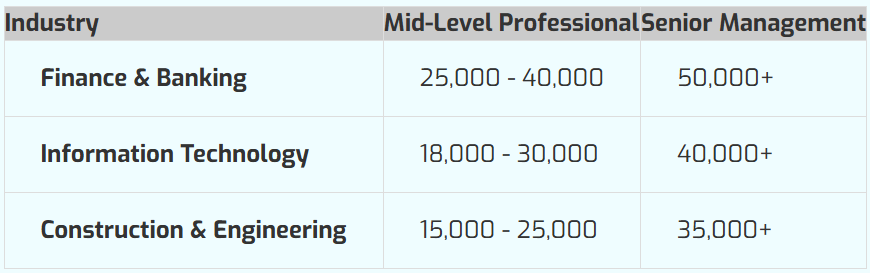
However, the cost of living is high. Housing is the most significant expense, often consuming 30-45% of a monthly income. Other costs like international schooling, utilities, and dining out can add up quickly. A comprehensive employment package, therefore, often includes a housing allowance, health insurance, and annual flight tickets.
Practical Guide for Relocation and Integration
- Secure a Job First: It is virtually impossible to move to Dubai to "look for work." You must have a job offer and a sponsoring employer to begin the visa process.
- Understand Your Contract: Scrutinize your offer. Ensure the salary structure (basic salary vs. allowances) and all benefits are clearly stated. Remember, your legal residency is tied to your employment.
- Prepare for the Process: Once an offer is made, your employer will initiate the visa process, which includes submitting documents, passing a medical test, and applying for your Emirates ID card. The entire process can take several weeks.
- Embrace the Culture: Dubai offers a safe, multicultural environment. Respecting local customs, such as modest dress in public places and etiquette during the holy month of Ramadan, is essential for a smooth transition.
Conclusion
Working in Dubai presents a remarkable opportunity for career advancement in a fast-growing, cosmopolitan hub. The job market is vibrant, with high demand in future-focused industries, and the benefit of tax-free income is a powerful financial incentive. Success depends on thorough preparation: securing a position in a high-demand sector, understanding the legal and visa framework, and realistically budgeting for a high cost of living. By navigating these elements strategically, you can unlock a rewarding professional and personal experience in one of the world's most dynamic cities.